

Stop Guessing With Your Glass: Fixing Batch Variance in Annealing
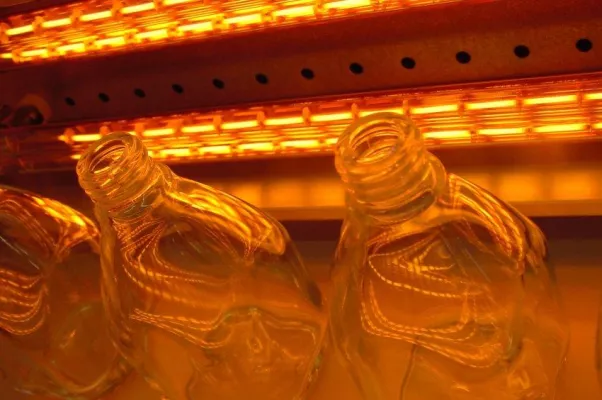
Glass annealing is all about precision. But here is the reality: if your infrared heating tubes are off by even 5%, you’ve got a problem. You’ll start seeing thermal gradients across your conveyor, which leads to internal stress and glass that breaks for no apparent reason. I see this happen all the time in plants that mix and match different brands of lamps or use tubes with loose tolerances. It’s a recipe for a headache. Why consistency actually matters It really comes down to how the tungsten filament is wound and the purity of the quartz. We keep the resistance tolerance incredibly tight. Think about it this way. When you wire up a bank of ten lamps, they all need to draw the exact same current. If one tube runs hotter than the rest, it’s going to burn out way too early. Now you’ve got a cold spot in your lehr. To fix that, you’ll probably crank up the overall temperature to compensate, which just wastes power and risks overheating your glass. The secret is in the materials We use high-purity quartz because it keeps the spectral output stable for thousands of hours. A “long-life” tube shouldn’t just be about the filament not snapping. That’s the bare minimum. The real goal is keeping the emission curve flat. Most standard tubes start to drift in wattage as they age. We focus on stopping that drift so your PID controllers aren’t constantly fighting to find the right setpoint. It just stays put. A quick warning on high-density heating High-wattage tubes are great for thick glass, but they put a massive load on your electrical bus. You can’t just swap in high-output tubes and call it a day. You have to check your wiring gauge and your contactor ratings first. If your voltage drops across a long run, the lamps at the end of the line will underperform. Suddenly, your batch uniformity is gone. Just make sure your power supply actually matches your tube specs. It saves a lot of frustration down the road.