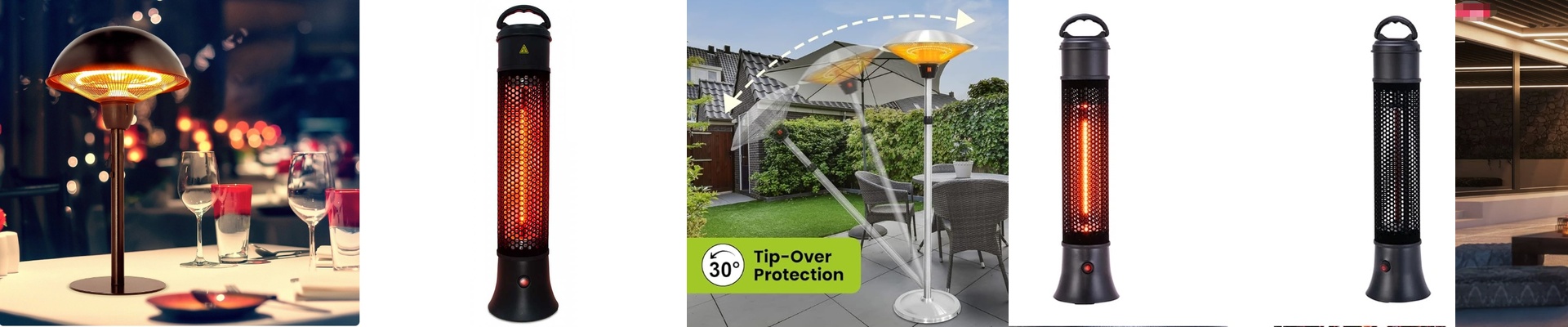
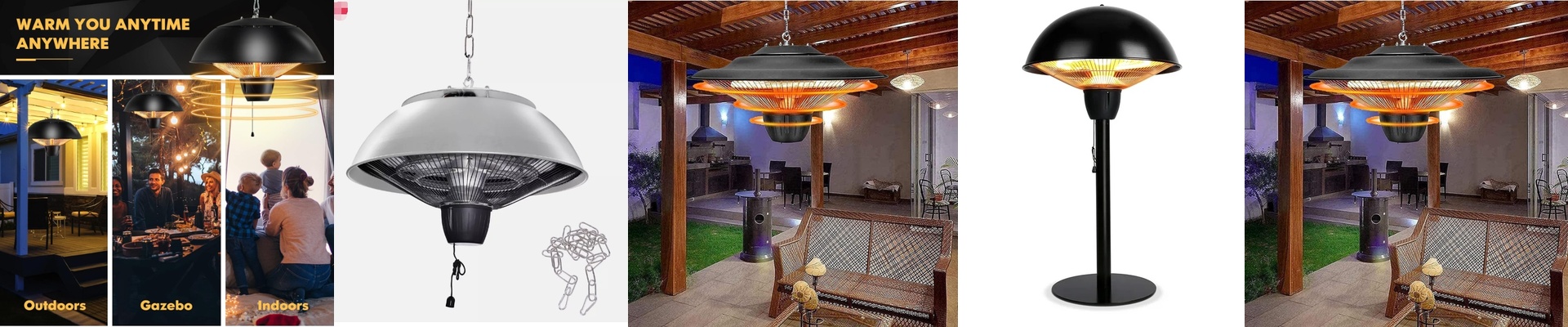
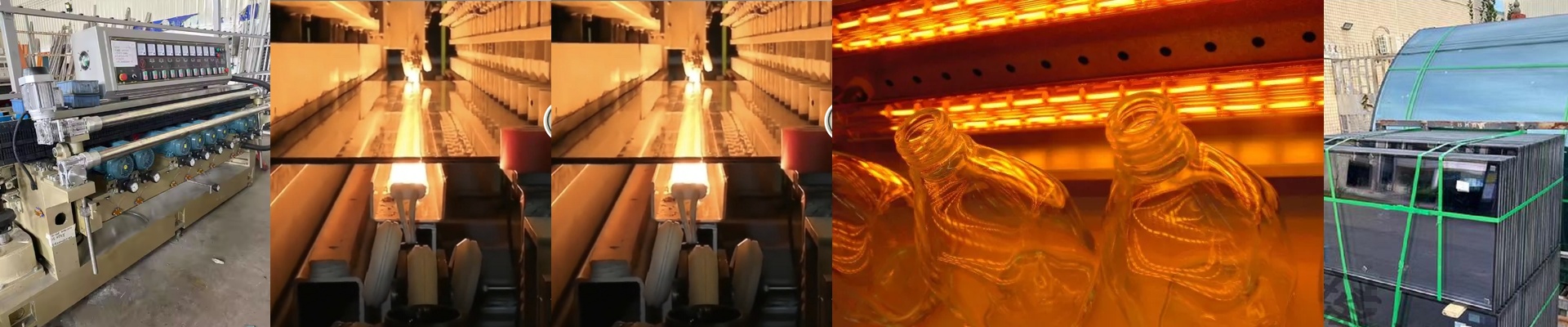
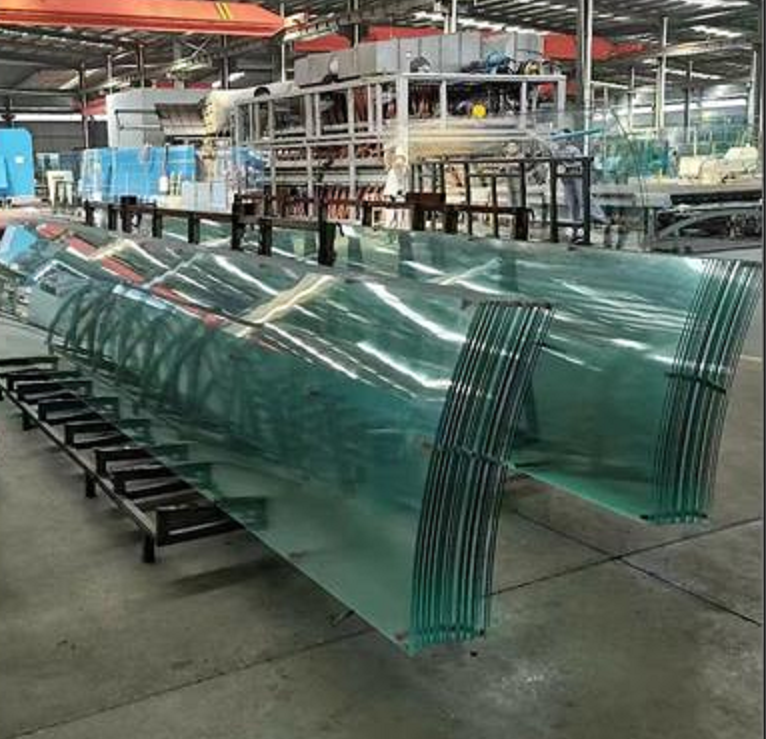
The oven door on the bending line swings open, and the heat hits you before the glass does. You watch the setter slide a windshield into the zone, and you know in seconds whether the shift will run clean—or spend the next hour fighting optical distortion and edge cracks. If the heater is throwing uneven thermal input at the glass—hot pockets in the middle, cool strips along the edges—you’re not just chasing defects. You’re chasing scrap, rework, and the safety headache that comes with stressed glass. Automotive glass bending heaters aren’t just heat sources. They’re the decision point where shape, stress, and optical clarity get locked in before the press even touches the part. If you want repeatable curvature without thermal stress fractures, you need a thermal field that’s uniform across the entire surface.
What actually matters
We build automotive glass bending heaters around one simple idea: control the heat distribution, and the process stops fighting you. The practical levers that make that happen are materials, wavelength, power density, and temperature measurement. Most lines run either short-wave quartz infrared or medium-wave ceramic/quartz systems, chosen to match how the glass surface absorbs energy. Short-wave gives you high power density and fast ramp-up, which keeps bending cycles moving. Medium-wave penetrates deeper and can help reduce surface-to-edge differences—handy for thicker laminates and complex wraps. It’s not dogma; it’s glass thickness, coatings, and the timing between heating and forming. The heater has to deliver a thermal field that holds the glass within a tight band across the whole surface—typically ±5 °C to ±8 °C in production, depending on part geometry and line speed. That tolerance is the line between clean glass and roller wave, bow, or haze. We get there with dense, low-thermal-mass elements arranged to balance radiant flux, plus reflectors that keep edges from cooling and stop stray losses. Power gets sized to the glass area and cycle time, not to a flashy number. For a typical windshield bending station, you’re looking at specific power around 25–40 kW/m², delivered through modular zones. Each zone can be trimmed independently to compensate for edge losses and center gain. The payoff is less thermal shock, fewer edge fractures, and less variation between left- and right-hand parts. Temperature control is closed-loop, with non-contact pyrometers scanning across the glass path. The system isn’t chasing a setpoint—it’s chasing uniformity. If the measurement shows an edge drift, the adjacent zone compensates within the cycle. That’s how you keep the same curvature from part 10 to part 10,000.
Why this matters on the line
On an automotive glass line, the bending heater sits in the middle of a tight sequence: cut, edge work, heating, forming, cooling. If heating is slow or uneven, the bottleneck moves fast—straight into rework. If heating is uniform and predictable, the bottleneck stays where it should be: on throughput. Uniform heating prevents the two most expensive failures in bending:
- **Thermal stress fractures.**Glass cracks when one area expands way more than another. Edge cracks, corner cracks, and fractures that show up after forming are often traced back to localized overheating or edge cooling. A controlled, even thermal field cuts the differential and keeps stress inside the glass strength envelope.
- **Optical distortion and shape drift.**Roller wave, bow, and curvature that won’t repeat come from uneven temperature at the moment of forming. When the center is hotter than the edges, the glass folds inward. When the edges run hotter, the wrap opens. Uniform heating gives you repeatable sag profiles, so the press closes on geometry that matches the CAD intent. Consistency also keeps optical quality in check. Automotive windshields and sidelites have strict distortion limits. When the heater runs with tight thermal uniformity, the glass forms evenly, and optical artifacts from uneven flow drop off. That means less scrap and fewer downstream lamination reworks. Energy use isn’t a “nice-to-have.” It’s a production cost. A heater that overshoots to compensate for cold edges wastes kilowatt-hours and adds unnecessary thermal inertia. With zoned control and matched power density, you run closer to the minimum energy needed for the required temperature profile. In practice, that can cut energy per part by double-digit percentages compared with older designs that lean on high overall power and long dwell. And when the heater is engineered as a drop-in module—matching the mounting envelope, connectors, and clearances of the existing bending station—you avoid the weeks of downtime that come with re-engineering the line. Swap it in, recalibrate, and get back to work.
The details you can’t skip
No industrial heater is truly plug-and-play. Automotive glass bending heaters are high-power systems, and they demand respect for electrical supply, cooling, and maintenance.
- **Power infrastructure.**These heaters draw serious current, usually three-phase, with tight voltage tolerances. The supply has to match the heater rating, and the feed has to handle the starting surge. Undersized wiring and weak contactors cause voltage drop—and that shows up as uneven heating and unstable control.
- **Thermal management.**Even efficient radiant heaters need cooling for the housing, terminals, and reflectors. Airflow has to be clean, sufficient, and directed where it prevents hot spots in the electrical compartment. Blocked cooling or exhaust recirculation will drift the thermal profile and shorten element life.
- **Compatibility with coatings and laminates.**If you’re running coated glass—low-emissivity, hydrophobic, or solar control—absorption changes. The heater has to be tuned to avoid overheating the coating, which can degrade performance or cause discoloration. That means adjusting wavelength, power density, and sometimes adding a protective cover glass or tweaking the dwell profile.
- **Maintenance planning.**Quartz elements and reflectors degrade over time. Dust, fumes, and thermal cycling reduce reflectivity and shift the heat balance. Inspect and clean reflectors on a schedule, and replace elements when output drifts beyond the calibration window. Keep spare modules for each zone so you don’t idle the line waiting for a single component.
- **Measurement discipline.**Pyrometers and thermal cameras need a clear line of sight and a stable emissivity reference. If you change glass color, thickness, or coating, you have to revalidate the temperature measurement method. A heater can perform perfectly and still read wrong if the sensor is misconfigured. If you’re running an automotive glass bending line, the heater isn’t just a box that makes things hot. It’s the device that decides whether your glass leaves the station as a saleable part—or as scrap. When thermal uniformity is engineered in, you get fewer fractures, tighter geometry, and a line that runs the speed it was designed for.