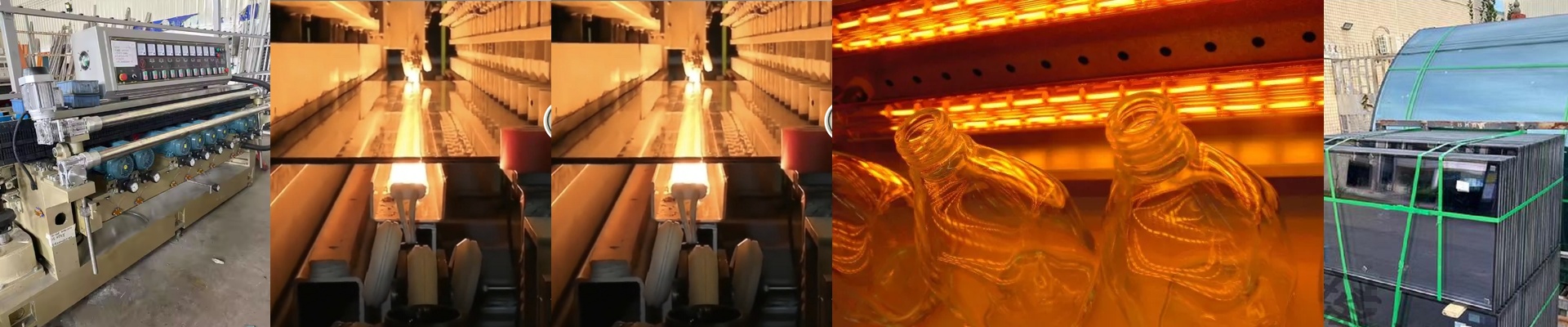
On the line, the cutting station doesn’t wait around. If the glass isn’t warmed evenly before scoring, you get micro-fractures running along the edge, chips popping up, and yield slipping—especially on coated stock or low-e insulating glass. The preheating lamp was built to kill that variability right where it starts. What makes it work, technically We run short-wave infrared quartz emitters, dumping energy straight into the surface with almost no convection. The lamp jumps from ambient to 600°C in under two seconds, then holds a 300–500°C window with ±3°C uniformity across the active zone. Power density is tuned to 45–60 kW/m²—fast response without overshoot that can set off thermal stress. Control is PID with SSR, so temperature stays steady when the line starts and stops. Why it matters on the floor Preheat before scoring keeps the edge ductile, so the score runs clean and the breakout stays controlled. That means fewer edge chips, fewer rejects, and throughput you can count on. The ramp is quick enough for high-speed lines, and the tight uniformity knocks out hot/cold bands that give you wavy edges and inconsistent scribe depth. And because heat is delivered on demand, you’re not burning energy idling a full oven. The practical details Installation is straightforward, but clearance matters. Keep at least 150 mm of standoff so you don’t overheat nearby seals and sensors, and make sure conveyor speed matches the lamp’s dwell time—otherwise you risk localized overheating on thin substrates. The unit drops into most OEM cutter frames, but verify voltage and connector compatibility beforehand so you don’t end up rewiring in the field.