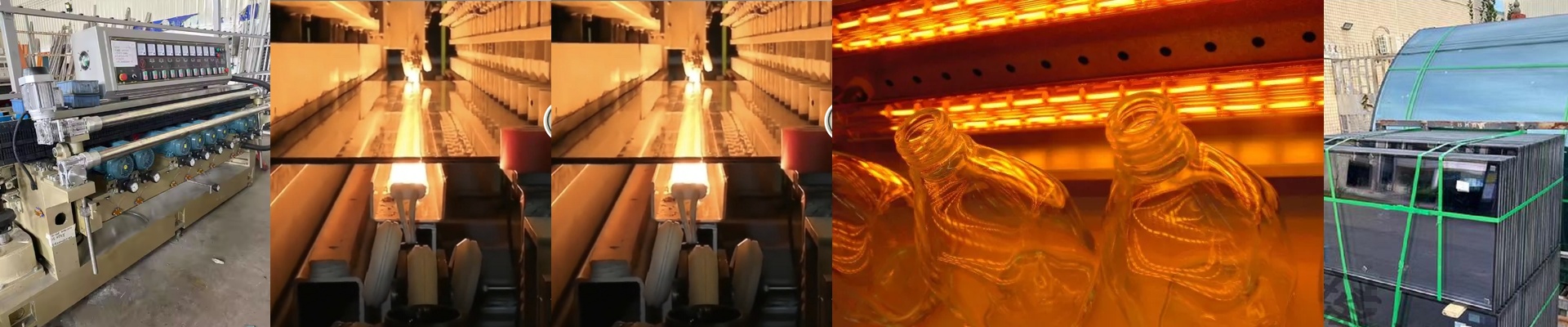
If you’ve ever dealt with complex glass shapes, you know the headache of “cold spots.” When you’ve got deep recesses or weird curves in your design, standard convection heating just doesn’t cut it. The heat simply can’t reach the tight spots. That’s why we use shortwave infrared (IR) molding lamps. Instead of relying on hot air to wander around the glass, these lamps push heat directly into the surface. It doesn’t matter if there are air gaps or awkward angles—the heat just hits the target. Getting the heat where it actually needs to go To handle those tricky shapes, you need a lot of power packed into a small space. We use high-wattage quartz filaments to make sure the heat actually reaches the core of the glass, not just the outside. If you’re running a high-volume line, keep an eye on your voltage-to-wattage ratio. You don’t want to blow your power rails. Because these IR lamps are so intense, we can cluster them in tight arrays. We basically surround the piece so there’s nowhere for a “shadow” to hide. The nitty-gritty on gear These aren’t flimsy bulbs. We build them with heavy-duty quartz envelopes because molding kilns are brutal on equipment. Then there’s the connector. You’ll usually choose between R7s or SK15. It sounds like a small detail, but it’s the difference between a quick swap and a nightmare when a tube burns out. We usually suggest R7s for industrial setups. They just handle the constant expansion and contraction of the pins much better. A few warnings Here is the catch: radiant heat is aggressive. While these lamps kill those annoying cold spots, they can easily overheat a thin-walled section if they’re sitting too close. You’ll need to spend some time calibrating your PID controllers and maybe slowing down your conveyor belt to avoid thermal shock. And please, check your wiring. These lamps pull a lot of current. If you use undersized cables, the wires will melt and fail long before the lamps ever do.