
Getting the Heat Right for Specialty Glass
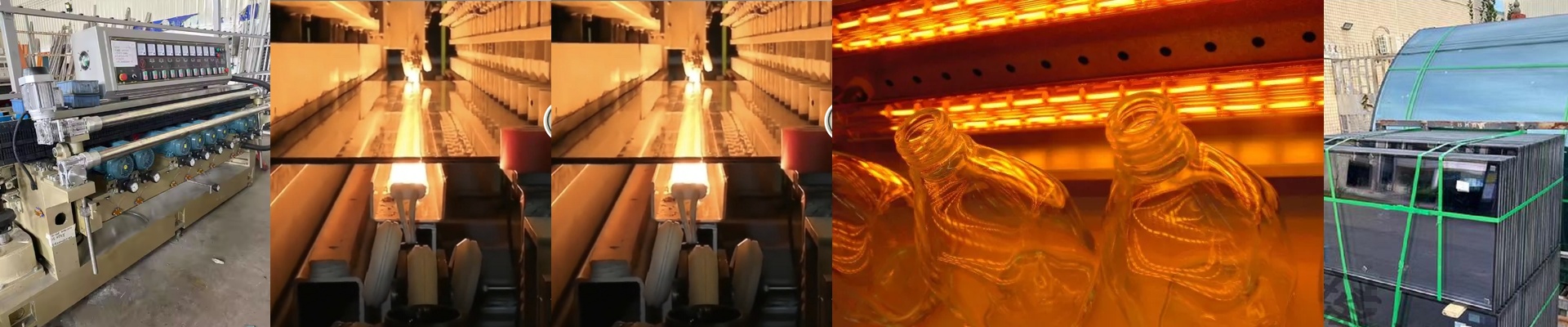
If you’ve ever tried using standard infrared lamps on specialty glass, you know the frustration. It just doesn’t work. The heat doesn’t go in; it just sits on the surface or bounces right off. That’s because when you add dopants or specific additives to glass, the material changes how it “sees” heat. We fix this by tweaking the infrared output to match the actual chemistry of your glass. It’s all about the frequency. Think of it like a radio. If you aren’t tuned to the right station, you get static. Glass is the same way. If the lamp’s emission doesn’t line up with the glass’s absorption peak, you’re wasting your time. We spec out the spectral distribution so the photons hit the exact frequency the glass is ready to soak up. The result? The heat actually penetrates deep into the material. You get a smooth, uniform temperature across the whole container wall instead of hot spots and cold zones. How we actually build it We don’t just crank up the wattage and hope for the best. That’s a rookie move. Instead, we mess with the filament composition and the coating on the quartz envelope to shift the wavelength. We filter out the junk frequencies that the glass doesn’t want and concentrate all that energy into the target band. It’s a tighter thermal profile, and it means you aren’t paying for energy that just disappears into the room. The real-world catch Now, here is the honest part. Custom tuning makes your heating faster and saves you from those nightmare internal stress fractures during annealing. It’s a huge win. But there’s a trade-off. These narrow-band, high-intensity elements are a bit more temperamental. They put more stress on the filament. If your power supply spikes, these precision lamps will pop way faster than a generic, wide-spectrum bulb. You’ve got to keep a close eye on your voltage stability. Make sure your controllers are calibrated exactly to the spec, or you’ll be replacing lamps a lot more often than you’d like. When you get this right, the heating element stops being just a “bulb” and becomes a precision tool. You stop fighting the physics of the glass and finally start working with them.